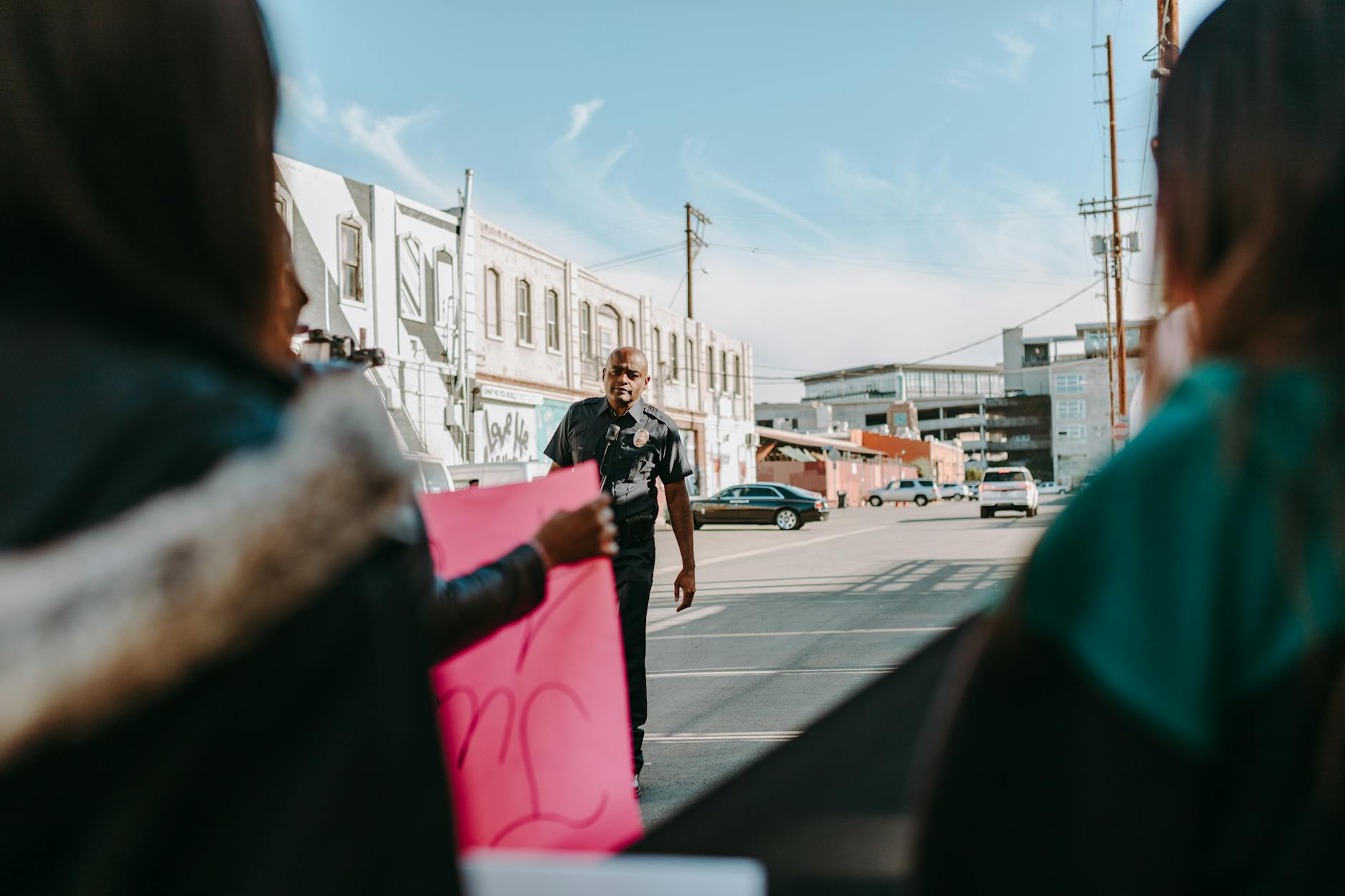
Community policing has emerged as a powerful tool in crime reduction, with studies showing a 20% decrease in crime rates in areas where it's implemented. This approach shifts the focus from reactive enforcement to proactive community engagement, fostering trust and collaboration between law enforcement and residents. However, the impact of community policing extends beyond crime statistics, significantly influencing how citizens' rights are preserved and respected.
Understanding how community policing affects rights is crucial for every citizen. Unlike traditional policing models, community policing prioritizes dialogue and partnership, ensuring that residents' voices are heard and their rights are upheld. This approach creates a safer environment not just by reducing crime, but by fostering mutual respect and understanding between police officers and the communities they serve.
Understanding Community Policing's Core Principles

Community policing operates on three core principles: partnership, problem-solving, and prevention. At its heart, it fosters collaboration between law enforcement and community members. This partnership builds trust, encouraging residents to actively participate in crime prevention efforts. Police officers become familiar faces, not just authority figures, creating a sense of shared responsibility for public safety.
Problem-solving lies at the core of community policing. Officers identify and address the root causes of crime and disorder. This proactive approach often involves working with community members to develop tailored solutions. For instance, if vandalism plagues a neighborhood, police might collaborate with residents to organize youth outreach programs or improve lighting in problem areas.
A study by the National Institute of Justice found that community policing can reduce crime by up to 20% while preserving individual rights. This is achieved through prevention strategies that focus on deterring crime before it occurs. Officers engage in activities like neighborhood patrols, youth mentoring, and community education. These efforts not only reduce crime but also enhance the quality of life for residents.
Preserving rights is a critical aspect of community policing. Officers receive training in de-escalation techniques and cultural competency. This ensures they interact with community members respectfully and professionally. By prioritizing rights, community policing builds trust and fosters a positive relationship between law enforcement and the public.
How Community Policing Balances Safety and Rights

Community policing represents a paradigm shift from traditional law enforcement strategies. By fostering partnerships between police officers and community members, this approach aims to address public safety concerns while respecting individual rights. Officers engage in proactive problem-solving, focusing on prevention rather than reaction. This collaborative effort builds trust and mutual respect, creating a safer environment for all.
A study by the National Institute of Justice found that communities implementing community policing strategies experienced a 20% reduction in crime rates. This success stems from the approach's emphasis on addressing root causes of crime, such as poverty and lack of opportunity. By working closely with residents, police can identify and mitigate these underlying issues.
Critics argue that increased police presence could potentially infringe upon civil liberties. However, community policing emphasizes de-escalation techniques and respectful interactions. Officers receive specialized training in conflict resolution and cultural competency. This ensures that rights are preserved while maintaining public safety.
Expert analysts highlight the importance of community policing in bridging the gap between law enforcement and the public. By prioritizing communication and transparency, this approach fosters a sense of shared responsibility for safety. Ultimately, community policing proves that crime reduction and rights preservation are not mutually exclusive goals.
Neighborhood Watch Programs: A Practical Approach

Neighborhood watch programs serve as a cornerstone of community policing, fostering collaboration between residents and law enforcement. These initiatives empower citizens to actively participate in crime prevention, creating a safer environment while respecting individual rights. A study by a prominent criminology research institute found that neighborhoods with active watch programs experienced a 15% reduction in property crimes, demonstrating the effectiveness of community engagement.
Community policing through neighborhood watch programs encourages open communication between residents and police officers. Regular meetings and patrols build trust, ensuring that residents feel comfortable reporting suspicious activities without fear of infringement on their rights. This proactive approach allows law enforcement to address potential issues before they escalate, maintaining a balance between security and personal freedoms.
Effective neighborhood watch programs emphasize the importance of training and education. Residents learn to recognize and report criminal activity while understanding their legal rights and limitations. This dual focus on crime prevention and rights awareness ensures that community members can contribute to safety without overstepping boundaries. The result is a harmonious relationship between the community and law enforcement, where both parties work together to uphold justice and protect individual liberties.
In areas where neighborhood watch programs thrive, residents often report a heightened sense of security and belonging. This sense of community not only deters crime but also fosters a culture of mutual respect and cooperation. By integrating community policing strategies, neighborhoods can achieve significant reductions in crime rates while preserving the rights and dignity of all residents.
Building Trust Through Police-Community Partnerships

Community policing transforms the relationship between law enforcement and residents. Officers become familiar faces in neighborhoods, fostering familiarity and mutual respect. This shift creates an environment where trust grows organically. A study by the National Institute of Justice found that communities with strong police presence report a 20% higher satisfaction with law enforcement.
Partnerships between police and community members lead to more effective crime prevention. When residents feel comfortable sharing information, officers can address concerns proactively. This collaborative approach ensures that policing strategies align with community needs. It also helps to identify and mitigate potential conflicts before they escalate.
Respect for individual rights remains a cornerstone of community policing. Officers trained in de-escalation techniques and cultural competency handle situations with greater sensitivity. This reduces the likelihood of rights violations. According to a policing expert, "Community policing isn't just about reducing crime; it's about building relationships that respect and uphold everyone's rights."
Regular community meetings and feedback sessions further strengthen this bond. These platforms allow residents to voice concerns and suggest improvements. Police departments can then tailor their strategies to better serve the community. This ongoing dialogue ensures that policing efforts remain transparent and accountable.
Ultimately, community policing creates a safer environment where rights are preserved. The focus on collaboration and mutual understanding benefits both officers and residents. This approach not only reduces crime but also fosters a sense of shared responsibility for public safety.
The Future of Community Policing in Urban Areas

Community policing represents a paradigm shift in law enforcement strategies, particularly in urban areas where crime rates and community tensions often intersect. By fostering trust and collaboration between police officers and residents, this approach not only reduces crime but also safeguards individual rights. Studies show that communities with strong police-resident partnerships experience a 20% lower crime rate, a testament to the effectiveness of proactive engagement over reactive enforcement.
One of the key benefits of community policing is its emphasis on problem-solving rather than punishment. Police officers work alongside community members to identify and address the root causes of crime, such as poverty, lack of education, and social inequality. This collaborative effort ensures that interventions are tailored to the specific needs of the community, thereby preserving the rights of all individuals involved.
A report by the Police Executive Research Forum highlights that community policing initiatives have led to a significant decrease in complaints related to police misconduct. When officers build relationships with the communities they serve, they are more likely to act with respect and sensitivity, thereby upholding the rights of residents. This mutual respect is crucial for maintaining social harmony and ensuring that law enforcement remains accountable to the public.
As urban areas continue to evolve, the future of community policing lies in its ability to adapt to changing demographics and technological advancements. By leveraging data-driven strategies and community feedback, law enforcement agencies can enhance their effectiveness while continuing to protect the rights of all individuals. This proactive approach ensures that community policing remains a vital tool in creating safer, more inclusive urban environments.
Community policing emerges as a powerful tool that balances crime reduction and the preservation of individual rights. By fostering trust and collaboration between law enforcement and residents, communities can achieve significant drops in crime rates while maintaining a respectful environment. To harness these benefits, law enforcement agencies should invest in training officers in community engagement strategies and encourage regular, positive interactions with residents. As communities continue to evolve, the future of policing lies in this collaborative approach, promising safer neighborhoods and stronger community ties.
Need this answered for your specific case?
Get a flat-fee consultation with a verified U.S. immigration attorney. Engagement letter on every paid consult.
Related guides
This guide provides general legal information and does not create an attorney–client relationship. Information accurate as of July 2026. Always verify current USCIS guidance before acting.