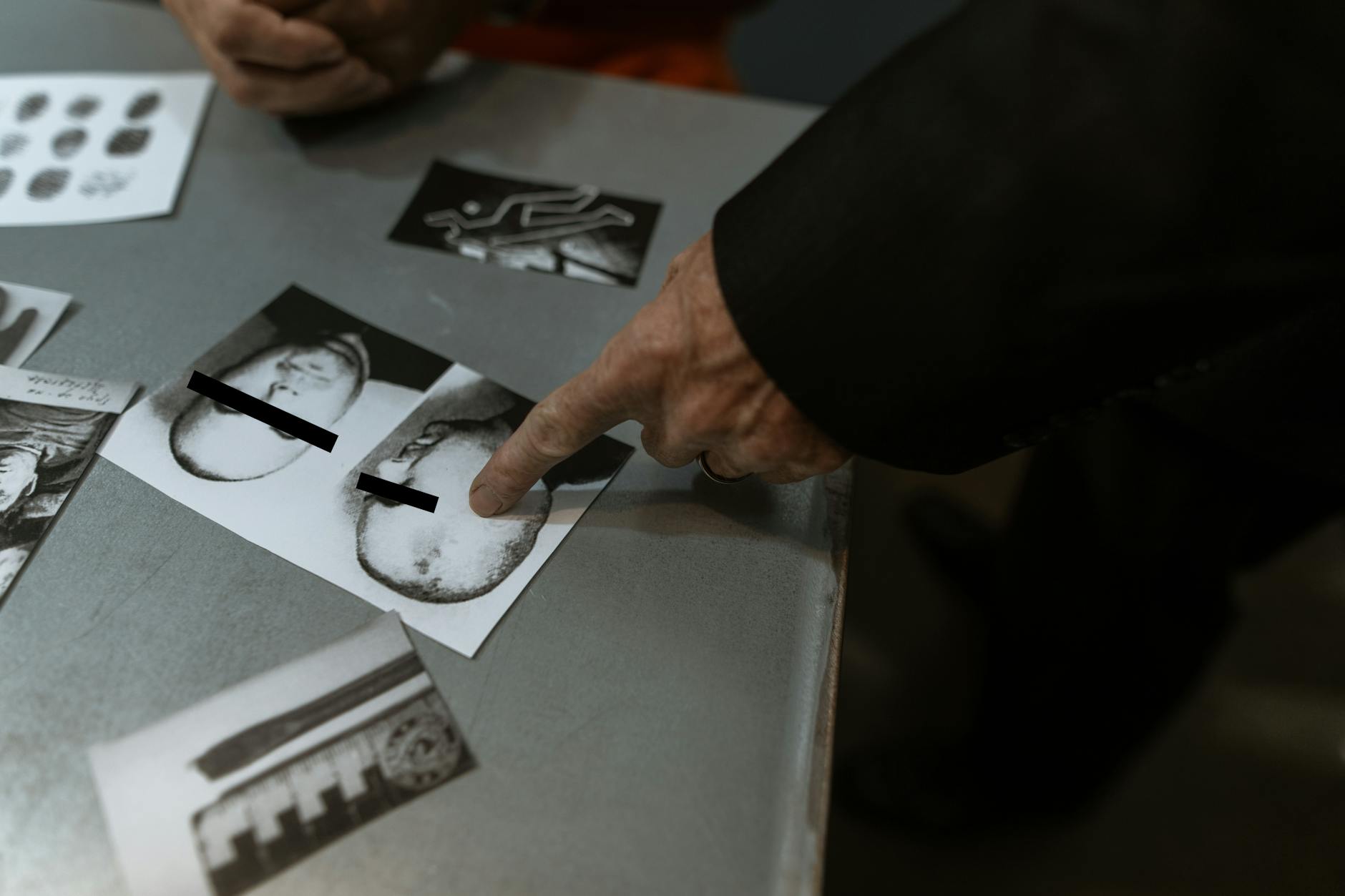
Every year, law enforcement agencies across the country handle thousands of criminal cases, each one a complex puzzle of evidence and testimony. The process of how police build a criminal case is both an art and a science, requiring meticulous attention to detail and a deep understanding of forensic principles. At the heart of this process lies the careful collection and analysis of five key types of evidence: physical, digital, testimonial, circumstantial, and forensic evidence.
Understanding how police build a criminal case is crucial for anyone interested in the justice system, whether as a concerned citizen, a legal professional, or simply an engaged observer. The intricate process of piecing together these five types of evidence can mean the difference between a conviction and an acquittal. From the crime scene to the courtroom, each piece of evidence plays a vital role in constructing a coherent and compelling narrative that stands up to scrutiny. This article delves into the methodologies and techniques that law enforcement uses to transform raw data into a compelling case.
The Foundation of Criminal Investigations

Criminal investigations begin with a foundation of meticulous evidence collection. Police officers start by securing the crime scene, ensuring no critical details are disturbed. They document everything from physical evidence to witness statements with precision. This initial phase sets the stage for the entire investigation, according to forensic experts. Every piece of evidence, no matter how small, can play a pivotal role in solving the case.
Witness statements often serve as the cornerstone of an investigation. Officers interview witnesses thoroughly, capturing every detail to reconstruct the sequence of events. These accounts can provide crucial insights that physical evidence alone might not reveal. For instance, a witness might recall a suspect's distinctive clothing or vehicle, which can narrow down the investigation significantly.
Physical evidence, such as fingerprints, DNA, or weapon fragments, provides tangible proof that can link suspects to the crime. Police use advanced forensic techniques to analyze and interpret this evidence. According to the FBI, forensic science plays a critical role in over 90% of criminal cases. This evidence can corroborate witness statements or even contradict them, ensuring a comprehensive understanding of the crime.
Digital evidence has become increasingly vital in modern investigations. Police examine electronic devices, social media activity, and digital communications to uncover valuable information. This type of evidence can reveal motives, alibis, or connections between suspects and victims. As technology evolves, law enforcement agencies continually update their methods to keep pace with the digital landscape.
Tracing the Path of Physical Evidence

Physical evidence provides a tangible foundation for criminal investigations. Police meticulously trace the path of objects, substances, or other items connected to a crime. This process often begins at the crime scene, where investigators collect and document every relevant piece. Each item becomes a clue, potentially linking suspects to the scene or revealing the sequence of events.
Forensic specialists play a crucial role in this process. They analyze physical evidence using advanced techniques to uncover hidden details. According to the FBI, forensic analysis contributes to solving nearly 40% of violent crimes. This underscores the importance of tracing the path of physical evidence accurately. Every mark, stain, or fiber can tell a story, guiding investigators closer to the truth.
Documenting the chain of custody is vital. Police must maintain a detailed record of who handled each piece of evidence and when. This ensures the evidence remains uncontaminated and admissible in court. Any break in the chain could compromise the entire case. Therefore, investigators follow strict protocols to preserve the integrity of physical evidence.
Technology enhances the tracing of physical evidence. Tools like 3D scanning and DNA analysis provide deeper insights than ever before. These advancements allow investigators to reconstruct crime scenes with remarkable precision. As technology evolves, so does the ability to trace the path of physical evidence effectively. This continuous improvement strengthens the foundation of criminal cases.
Unlocking Digital Clues in Modern Cases

Digital evidence has become a cornerstone of modern criminal investigations. Police now routinely examine smartphones, computers, and other devices to uncover crucial information. According to a recent study, digital evidence plays a pivotal role in over 80% of criminal cases. Detectives often look for call logs, text messages, and social media activity that might reveal connections between suspects and victims.
Forensic analysts use specialized software to extract and analyze data from devices. This process can reveal deleted files, browsing history, and even location data. The precision of this work allows investigators to reconstruct timelines and establish alibis or implicating evidence. A seasoned digital forensics expert can spend hours meticulously piecing together fragments of data to build a coherent narrative.
Cloud storage and online accounts also provide valuable insights. Police can obtain warrants to access emails, cloud backups, and even smart home device logs. These sources often contain communications and activities that might not be stored locally on a device. The integration of digital evidence with traditional investigative methods has significantly enhanced the ability to solve complex cases.
Challenges remain, however. Encryption and privacy laws can sometimes hinder access to critical data. Despite these obstacles, the importance of digital evidence continues to grow. As technology evolves, so too do the techniques used by law enforcement to unlock the secrets hidden within our devices.
The Role of Witness Testimony and Statements

Witness testimony forms the backbone of many criminal investigations. Police rely heavily on firsthand accounts to reconstruct events, identify suspects, and establish timelines. According to the National Institute of Justice, eyewitness statements contribute to the resolution of approximately 70% of criminal cases. These accounts provide crucial context that physical evidence alone cannot offer, such as the demeanor of individuals involved or the sequence of events.
Statements from witnesses can vary widely in reliability. Investigators must carefully assess credibility, considering factors like the witness's proximity to the event, potential biases, and memory accuracy. Police often employ techniques like the Cognitive Interview to enhance recall while minimizing suggestion. This method encourages witnesses to recount events in multiple ways, increasing the likelihood of accurate information.
In some cases, witness testimony serves as the sole evidence. Without corroborating physical evidence, investigators face significant challenges. They must meticulously document statements, cross-reference details, and identify inconsistencies. The process demands patience and precision, as even minor discrepancies can impact the case's strength. Ultimately, the quality of witness testimony can make or break a criminal investigation.
Advancing Forensic Techniques for Future Cases

Forensic science continues to evolve, offering law enforcement new tools to solve crimes. Advanced DNA analysis now allows investigators to extract genetic material from even the most challenging samples, such as degraded or mixed DNA. This breakthrough has significantly increased the number of cases that can be solved, with some studies suggesting a 30% improvement in solving cold cases. Additionally, techniques like touch DNA analysis enable detectives to identify suspects from traces left behind on objects.
Digital forensics has also seen remarkable advancements. Cybercrime units now employ sophisticated software to recover deleted files, trace IP addresses, and analyze metadata. These methods have become crucial in cases involving cyberstalking, fraud, and other digital crimes. The integration of artificial intelligence further enhances the ability to predict patterns and identify suspects based on vast amounts of data.
Another area of progress is forensic anthropology, which helps identify human remains and determine the cause of death. Techniques such as 3D imaging and isotopic analysis provide detailed insights into the circumstances surrounding a death. These methods are particularly valuable in cases involving mass disasters or unidentified victims. The field continues to grow, with ongoing research focused on improving accuracy and efficiency.
As forensic techniques advance, law enforcement agencies must stay updated with the latest technologies and training. Collaboration between scientists, technicians, and investigators is essential to ensure that evidence is collected, analyzed, and presented effectively in court. The future of forensic science holds promise for even greater advancements, further aiding in the pursuit of justice.
Building a criminal case is a meticulous process that hinges on the careful collection and analysis of key evidence types. From physical evidence like fingerprints and DNA to digital data, witness testimonies, and forensic accounting, each piece plays a crucial role in painting a comprehensive picture of the crime. To better understand this process, citizens can familiarize themselves with local law enforcement resources or community programs that explain evidence collection and legal procedures. As forensic technology continues to advance, the precision and speed of building criminal cases will only improve, offering greater justice and safety for communities.
Need this answered for your specific case?
Get a flat-fee consultation with a verified U.S. immigration attorney. Engagement letter on every paid consult.
Related guides
This guide provides general legal information and does not create an attorney–client relationship. Information accurate as of July 2026. Always verify current USCIS guidance before acting.