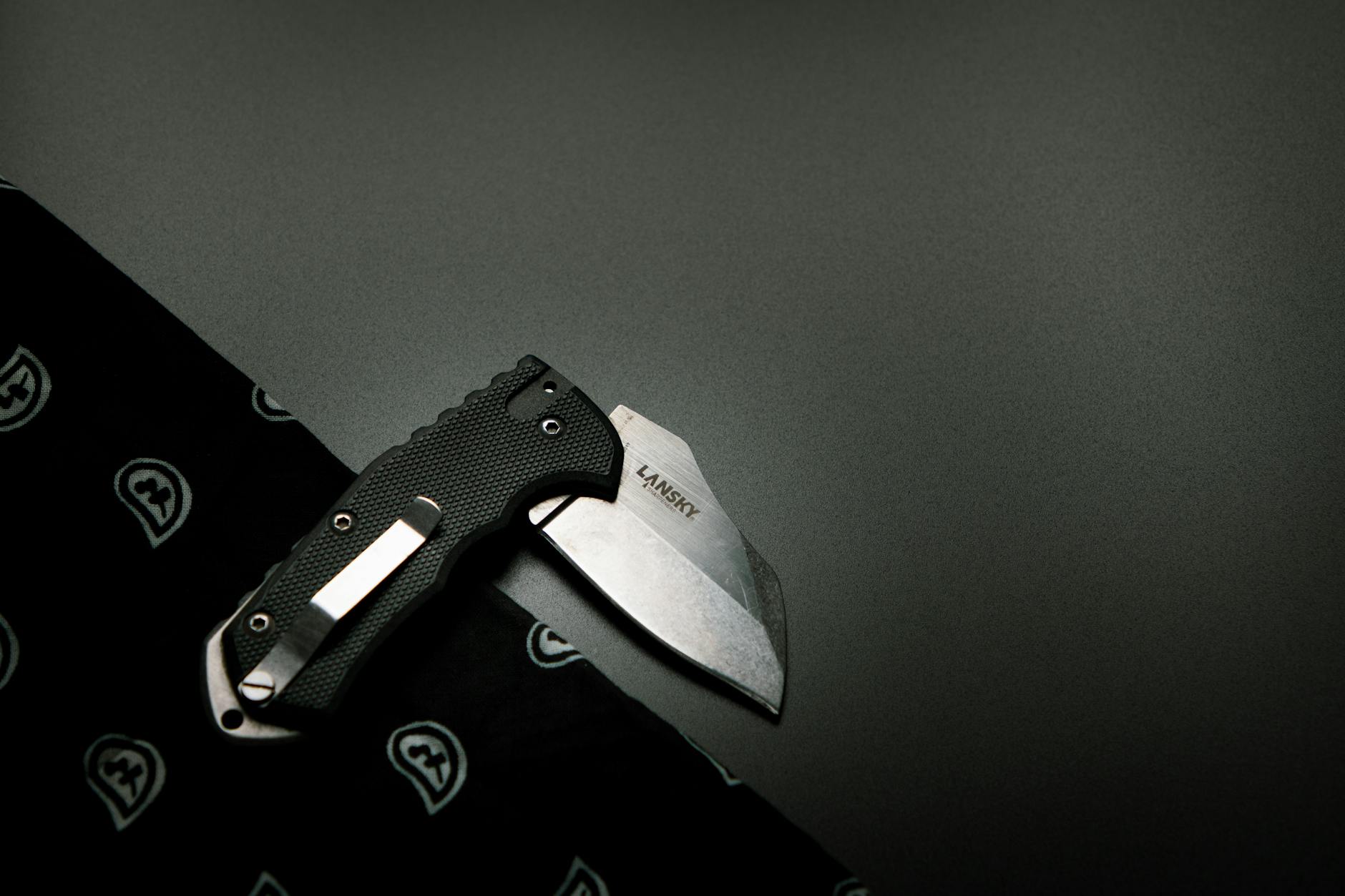
Australia's knife laws are a patchwork of regulations that vary significantly from state to state. Unlike some countries with uniform legislation, Australia's approach to knife possession and carrying is far from straightforward, leaving many residents and visitors uncertain about their rights and responsibilities.
Understanding whether carrying a knife is illegal in Australia requires a state-by-state examination. The laws reflect each jurisdiction's unique approach to public safety and individual rights. For instance, New South Wales has strict regulations, while other states may offer more leniency. The question, "Is carrying a knife illegal in Australia?" doesn't have a one-size-fits-all answer. Each state's legislation dictates what is permissible, making it crucial for individuals to familiarize themselves with local laws to avoid unintended legal consequences.
Understanding Australia's knife legislation

Australia's knife legislation operates on a state-by-state basis, creating a complex legal landscape. Generally, carrying a knife in public without a valid reason can lead to legal consequences. Most states categorize knives as prohibited items, especially those designed for combat or with certain blade lengths. Penalties range from fines to imprisonment, depending on the circumstances and jurisdiction.
Victoria stands out with particularly stringent laws. The state prohibits carrying any knife in public without a lawful excuse. This includes utility knives and even some kitchen knives. Authorities have seized over 5,000 knives in Melbourne alone over the past year, highlighting the enforcement of these regulations. Legal experts emphasize the importance of understanding local laws to avoid unintended violations.
New South Wales and Queensland have similar but slightly less restrictive laws. These states focus on intent and context. Carrying a knife for legitimate purposes, such as work or recreation, may be permissible. However, authorities scrutinize situations where knives are carried in public without clear justification. The legal threshold for "lawful excuse" remains a critical factor in these cases.
Western Australia and South Australia follow comparable frameworks. Both states prohibit carrying knives designed for offensive purposes. Utility knives and tools with blades under specific lengths may be allowed for legitimate use. However, carrying such items in public spaces requires caution. Authorities recommend consulting local regulations to ensure compliance.
Tasmania and the Northern Territory have more relaxed laws. These regions focus on intent rather than the type of knife. Carrying a knife for self-defense or other illegitimate purposes can lead to charges. However, using a knife for work or outdoor activities is generally acceptable. Legal experts advise individuals to stay informed about local laws to avoid legal issues.
State-specific regulations and exceptions

Australia's knife laws present a complex landscape, with each state and territory establishing its own regulations. In New South Wales, for instance, carrying a knife in a public place without a lawful excuse constitutes an offense. The law specifies that a "lawful excuse" includes using the knife for work, a lawful recreational activity, or for displaying it at a public event. Penalties can be severe, with fines up to AUD 2,200 and potential imprisonment for up to two years.
Victoria takes a slightly different approach. While it is legal to carry a knife, the law prohibits carrying a knife with the intent to use it as a weapon. The state also has specific regulations regarding the types of knives that can be carried. According to a report by the Victoria Police, knife-related offenses have increased by 15% in the past five years, highlighting the importance of understanding local laws.
Queensland's laws are particularly strict. Carrying a knife in a public place is illegal unless the individual can prove a genuine reason. The state also has a ban on certain types of knives, including butterfly knives and flick knives. A legal expert from Queensland noted that the laws aim to balance public safety with the rights of individuals to carry tools necessary for their work or hobbies.
Western Australia distinguishes between carrying a knife for lawful purposes and carrying it with intent to harm. The state allows carrying a knife for work, sport, or recreation, but prohibits carrying it in a way that could cause alarm or distress. The penalties for violating these laws can include fines and imprisonment, depending on the circumstances.
Understanding these state-specific regulations is crucial for anyone carrying a knife in Australia. The variations in laws across states underscore the need for individuals to be aware of the specific regulations in their area to avoid legal consequences.
When and where carrying a knife is legal
Australian knife laws vary significantly by state, creating a complex legal landscape for residents and visitors alike. In New South Wales, for instance, carrying a knife in public without a lawful excuse is prohibited. The law defines a knife as any blade over 6 cm, and penalties can include fines or imprisonment. Exceptions exist for certain occupations, like chefs or hunters, who must carry appropriate documentation.
Victoria takes a slightly different approach, allowing knives in public but with restrictions. Fixed-blade knives over 20 cm require a permit, while folding knives are generally permitted. A 2019 report by the Victoria Police found that knife-related offenses accounted for 12% of all weapon-related crimes in the state. This highlights the importance of understanding local regulations to avoid legal trouble.
Queensland's laws are more lenient, permitting the carrying of knives in public for lawful purposes, such as work or recreational activities. However, carrying a knife with the intent to use it as a weapon is strictly prohibited. The Queensland Police Service emphasizes education and awareness campaigns to ensure residents understand these nuances.
Western Australia imposes stricter regulations, prohibiting the carrying of knives in public without a reasonable excuse. The state defines a reasonable excuse as activities like fishing, camping, or certain professions. Violations can result in heavy fines or imprisonment, underscoring the need for careful adherence to local laws.
Penalties for violating knife laws

Penalties for violating knife laws in Australia vary significantly depending on the state or territory. In New South Wales, for instance, carrying a prohibited weapon like certain types of knives can result in fines up to AUD 5,500 and even imprisonment for up to two years. The severity of the penalty often depends on factors such as the type of knife, the intent of the carrier, and any prior criminal history.
Victoria takes a particularly stern approach. Authorities there have cracked down on knife possession, with penalties ranging from on-the-spot fines to more severe legal consequences for repeat offenders. According to a recent report by the Victoria Police, knife-related offenses have seen a 15% increase over the past five years, prompting stricter enforcement.
In Western Australia, carrying a knife in public without a lawful excuse can lead to fines or imprisonment. The laws are designed to balance public safety with the rights of individuals who may carry knives for legitimate reasons, such as work or recreational activities. Legal experts emphasize the importance of understanding local regulations to avoid unintended penalties.
Queensland imposes fines up to AUD 13,000 for carrying prohibited weapons, including certain knives. The state's laws reflect a growing concern over knife-related crimes, with authorities urging residents to familiarize themselves with the specific regulations in their area. Compliance with these laws helps ensure public safety while respecting individual rights.
Potential changes to knife legislation

Australia's knife legislation has long been a patchwork of state-based regulations, but recent discussions suggest potential changes on the horizon. With increasing public concern over knife-related incidents, policymakers are examining ways to harmonize laws across the country. A recent report by the Australian Institute of Criminology found that knife-related offenses accounted for 15% of all weapon-related crimes in 2022, highlighting the need for consistent legislation.
One proposed change involves stricter regulations on the sale and possession of certain types of knives. Some states are considering bans on selling knives to individuals under 18, mirroring existing alcohol and tobacco laws. Others are looking at mandatory age verification processes for online knife purchases, aiming to close loopholes in current regulations.
Another area of focus is the classification of knives. Currently, laws vary significantly between states regarding what constitutes an illegal knife. Standardizing these definitions could simplify enforcement and reduce confusion among the public. Experts suggest that clearer guidelines would help both law enforcement and citizens understand the legal boundaries.
Public consultation and stakeholder engagement are crucial steps in any legislative change. Authorities are likely to seek input from law enforcement, retailers, and community groups before finalizing any new laws. This collaborative approach ensures that the final legislation balances public safety with practical considerations for everyday knife use.
Australia's knife laws are a patchwork of state-specific regulations, with each jurisdiction setting its own rules about what's legal to carry and when. The key takeaway is that what's permissible in one state may not be in another, so understanding local laws is crucial. To stay on the right side of the law, always research the specific knife legislation for the state you're in, and when in doubt, leave the knife at home. As attitudes and laws continue to evolve, staying informed will be essential for anyone who carries a knife, whether for work, hobby, or personal protection.
Need this answered for your specific case?
Get a flat-fee consultation with a verified U.S. immigration attorney. Engagement letter on every paid consult.
Related guides
This guide provides general legal information and does not create an attorney–client relationship. Information accurate as of July 2026. Always verify current USCIS guidance before acting.